




Savage 61 Chrysler Dodge Jeep Ram

Savage 61 Chrysler Dodge Jeep Ram in Reading PA is a DealerRater 2025 Dealer of the Year
Blog / Savage 61 Listicles

5 Dodge Facts You Probably Didn't Know

DodgeLaFemme2

When Horace Elgin Dodge and John Francis Dodge founded the Dodge Brothers Company in 1900, they weren't thinking about fast cars. In fact, Horace was busy patenting a dirt-resistant bicycle bearing in 1896. The following year, production began for the Evans & Dodge Bicycle Company.

Fortunately, in 1901, the mechanically-minded brothers shifted their focus to automobiles. The rest, as they say, is history. In 1903, they teamed up with newcomer Ford Motor Company to manufacture engines and transmissions. Then, in 1914, they introduced the very first Dodge vehicle. By 1915, Dodge was already the third best-selling automaker in America. From their humble beginnings in Niles, Michigan, the Dodge brothers left bicycles behind and established one of the most successful auto manufacturing companies in the country.

Although both brothers passed away in 1920, neither could have expected just how greatly Dodge's legacy would outlive them. In 1928, their family sold the company to Chrysler, where it continues to thrive as its mid-priced brand. Despite its ongoing success, there are still plenty of little-known facts about Dodge's history that you may not be aware of. Courtesy of Savage 61, here are five to get you started.

Mechanizing the War Effort 

Back in 1916, Lieutenant George Patton Jr. took charge of the very first mechanized cavalry charge in the history of the U.S. Army. Patton commanded from a Dodge WC57 Command Car, and with just two additional Dodge vehicles and 15 soldiers, they went head-on against Pancho Villa and ultimately vanquished their lieutenants. As years went by, these mechanized cavalry charges became a primary tactic for the American military. (Their final horse-mounted cavalry charge went down in the Philippines in the early days of 1942.)

Engineered to Excel 

Dodge has always been leading the charge in developing and putting to the test new, high-performance engines. It all started back in 1930 when Dodge rolled out its very first eight-cylinder engine – the same year they started offering factory-installed car radios. Unfortunately, due to the Great Depression, that engine was discontinued in 1934, but it was later brought back to life in 1952. Fast forward to 2014, and the Dodge Ram 1500 made history as the first compact pickup truck to offer a diesel engine option.

One For the Ladies 

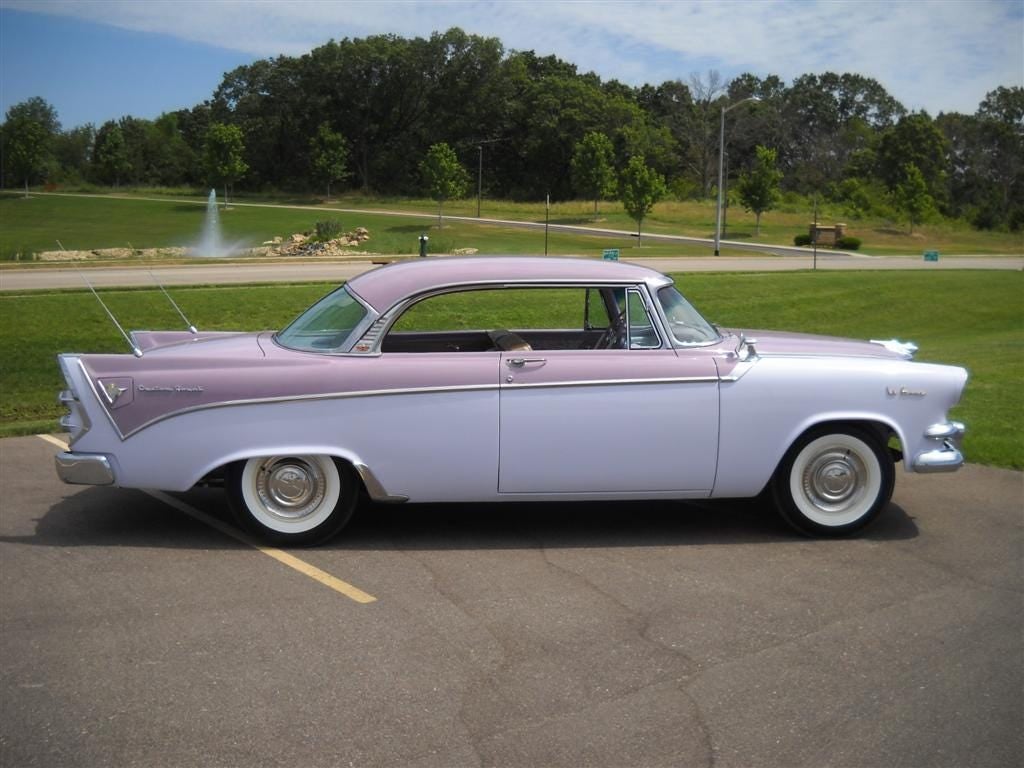
During the mid-1950s, Dodge introduced the Dodge La Femme, a full-sized car tailored exclusively for women. Recognizing the growing interest of women in automobiles at that time, Chrysler's marketing department conceptualized the La Femme, aiming to seize a share of the women's car market.

The La Femme's interior truly embodied conventional feminine ideals of the 1950s. The 1955 models boasted pink rosebud upholstery against a delicate silver-pink backdrop. Each vehicle came with a stylish keystone-shaped purse made of soft pink calfskin, equipped with a variety of accessories. These accessories included a face-powder compact, cigarette case, lipstick case, and coin purse. Additionally, a special compartment behind the driver's seat housed a matching raincoat, rain bonnet, and umbrella made from the same rosebud fabric.

Despite its... unique charm, the La Femme did not have much success in the market. Dodge discontinued the line in 1957 after only a pair of models were produced. Therefore, it'll take some deep-diving on eBay if you want to drive around the streets of Reading in the most gaudy way possible this holiday season.

The Origin of the “Fratzog” Emblem 

From 1962 to 1976, Dodge had a logo made up of three interlocking triangles. This funky geometric arrangement was known as a "Fratzog." How did it get such a peculiar name? Well, back in the early 1960's, one of Dodge's designers needed a temporary title for the emblem and came up with the random word "Fratzog." Simply put, no one else on the design team could come up with a better name, so the Fratzog moniker stuck and would continue appearing on steering wheel center hubs until the late 1970s.

Highs and Lows on the Racing Circuit 

Dodge has been on both sides of racing glory and infamy. Lee Petty put Dodge on the racing map in 1953, when he became the first driver to earn a NASCAR victory for Dodge during a race in Palm Springs, Florida. 

But in 1971, the Indianapolis 500 was marred by a crash involving the Dodge Challenger serving as the race’s pace car. Eldon Palmer, a local Indianapolis-area Dodge dealer, lost control of the Challenger at the race’s start. It proceeded to crash into a photographer’s stand, injuring 29 people.

Drive a Dodge Into Tomorrow 

Here at Savage 61, we continue to champion Dodge’s present as we honor its past. Check out our full inventory of new and pre-owned Dodge vehicles today - or sell us your ride. From service to parts, Savage 61 has everything you need to keep you on the road in 2024, as you continue to write your own history. 

Posted in:

Related Posts

Sci-fi futuristic city with skyscrapers and neon colored streetlights in snowy night.

Celebrating the Legendary Vehicles of Sci-Fi for National Science Fiction Day

Every January 2nd, science fiction fans across the globe come together to celebrate National Science Fiction Day, a day dedicated to the imaginative universes birthed from film, literature, and creative minds. Among the countless wonders of sci-fi, futuristic cars have always captured our fascination, with their sleek aesthetics, groundbreaking technology, and roles in unforgettable stories. In honor of the day, we’re taking a thrilling ride through time to revisit some of the most iconic sci-fi vehicles that continue to ignite our imaginations. Luke Skywalker’s Landspeeder Nothing says "sci-fi cars" like speeders from the Star Wars universe. Out of all the variations we've seen on the screen, there’s something special about Luke’s trusty Landspeeder from A New Hope. Its worn, utilitarian design makes this speeder feel less like a luxury spaceship and more like the farm boy’s darting roadster. Its hovering body gliding effortlessly across the sands of Tatooine was groundbreaking for its time, making us all dream of such an innovative car. While we’re not quite there yet, the Landspeeder reminds us why sci-fi cars spark the imagination—they offer a glimpse into possibilities that may one day find their way into reality. The DeLorean from Back to the Future When you think of sci-fi cars, the DeLorean from Back to the Future is likely the first to come to mind. By the mid-'80s, this stainless-steel icon was already futuristic—but add time travel, gull-wing doors, and Doc Brown’s zany genius, and it became a pop culture legend. Who can resist the idea of combining a vehicle with the ability to jump into any moment of history (or future)? What started as a quirky design has since become one of the most recognizable sci-fi cars in history. Even without a flux capacitor, the DeLorean showed us what happens when retro and futuristic elements fuse into a vision both fantastical and functional. Fun Fact: Did you know the original time machine in Back to the Future was supposed to be a refrigerator? Thankfully, Robert Zemeckis and Bob Gale made the call to turn it into a car—and the rest is history (or the future, depending on how you see it). Ford Taurus – ROBOCOP When Robocop hit theaters in 1987, it wasn’t just the hyperviolent dystopia that piqued audiences’ interest—it was also the slick, matte black Ford Taurus patrol car. This trusty futuristic ride carried RoboCop through the streets while capturing a sense of grounded realism mixed with sci-fi cool. Modified with push bars, a lightbar, and police gear, the Taurus became a sci-fi police cruiser staple that fans of the franchise adored (and tried to emulate). From there, it earned a legacy as one of the most practical and recognizable sci-fi cars in cinema, staying etched in the memory of its fans even though Ford officially discontinued the Taurus in 2019. V8 Interceptor – Mad Max No discussion of sci-fi cars would be complete without the V8 Interceptor from Mad Max. This ride isn’t just a car—it’s a character, symbolizing the grit and raw power of the dystopian wastelands that Max roams. Based on the Ford Falcon XB GT Coupé, the Interceptor has a menacing exterior with flared arches, spoilers, and eight exhaust pipes. It’s powered by a supercharger poking through its bonnet—a detail that screams both rebellion and survival. Whether used as a bargaining token or a deadly tool for revenge, this iconic Australian classic remains a sci-fi cinematic legend for its sheer presence, turning every road scene into an adrenaline-packed spectacle. Minority Report’s Lexus 2054 When a sci-fi director pairs up with a leading automaker, you get true conceptual magic. Steven Spielberg worked directly with Lexus' design team to create the futuristic Lexus 2054 for Minority Report. This sleek, autonomous vehicle embodied visions of the future, blending flawless curves with advanced functionality. Designed to drive itself and operate on complex highways, the Lexus 2054 was an ideal symbol of a world where technology drives society. While it didn’t dominate the screen as much as some of the other vehicles on this list, its partnership with a real-world automaker made it stand out as one of the most fascinating glimpses into the possibilities of automotive innovation. Drive Into the Future With Electric Vehicles at Savage 61 Sci-fi has given us glimpses of the future, sparking innovation in the real world. When you think about it, electric vehicles (EVs) are today’s connection to "sci-fi cars," combining cutting-edge design with emission-free technology for a better tomorrow. At Savage 61, you can sample what the future feels like by exploring electric vehicles from Chrysler, Jeep, Dodge, Ram. With advanced features, sleek designs, and an emphasis on efficiency, our EVs are built to bring science-fiction dreams to life.

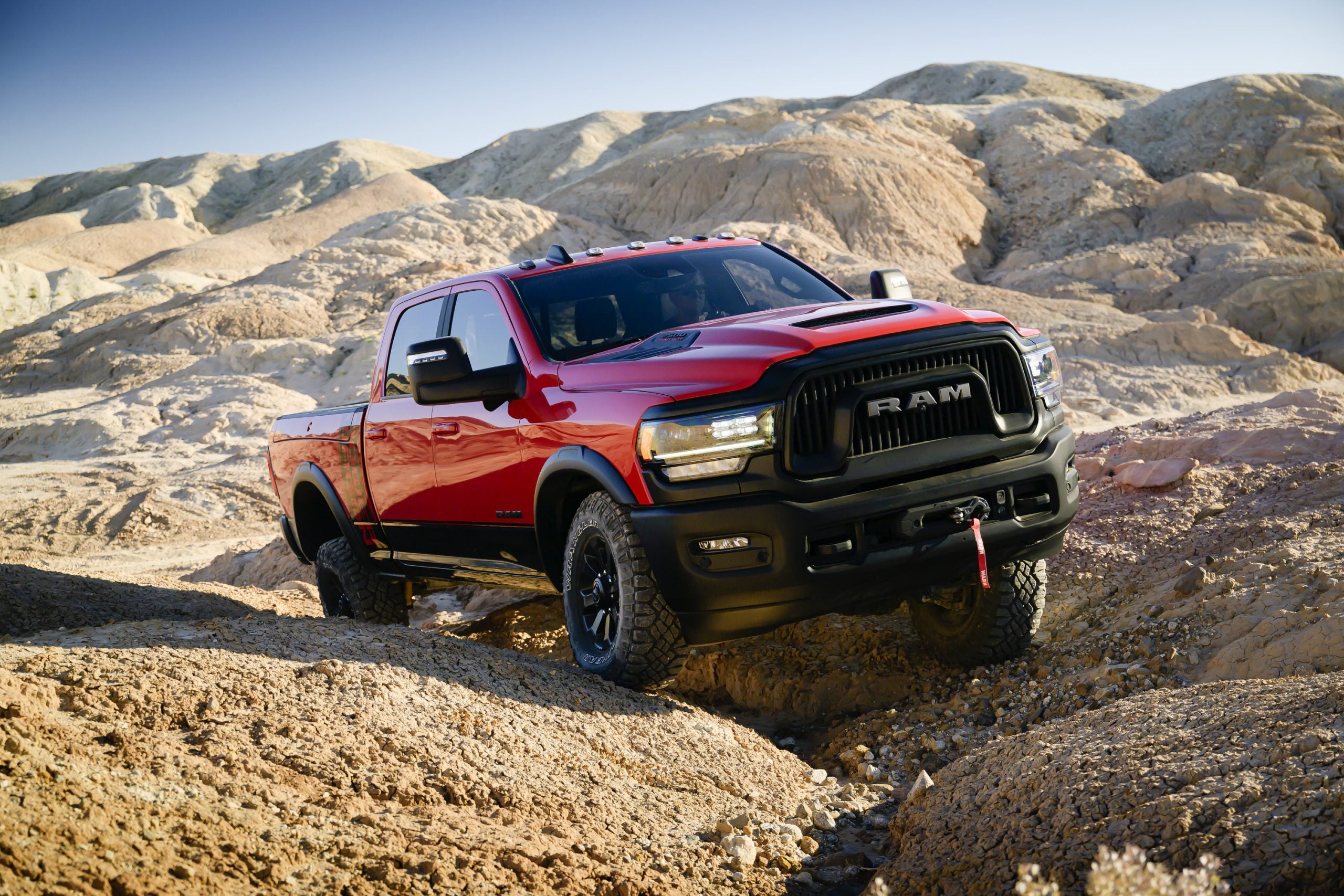
red 2024 RAM 3500 HD climbing rocky hills

Will It Tow? What You Can Tow With a 2024 RAM 3500 HD

Truck towing can be a different experience depending on class, model, and make. However, with a few easy tips you can tow just about anything. How and what can you tow with the 2024 RAM 3500 HD’s 37,000 lb. towing limit? Read below for basic towing tips and to learn about all the things you can tow in your new truck! Towing Safety Towing safety begins with understanding your vehicle's towing capacity, the maximum weight it can pull safely. This varies by configuration, load, and trailer weight distribution. Manufacturer-provided capacities often assume only the driver is in the vehicle, so adjust for extra passengers and cargo. To calculate towing capacity, know your vehicle's gross combined weight rating (GCWR) and curb weight. Subtract curb weight from GCWR, maintaining a 10% safety margin for shifting loads and sudden stops. Understand the gross vehicle weight rating (GVWR), which includes the vehicle's weight with passengers, fuel, cargo, and tongue weight. Exceeding the GVWR risks mechanical failure and legal issues. Familiarize yourself with terms like braked vs. unbraked towing capacity, gross axle weight rating (GAWR), and payload capacity. Use your vehicle's correct trailer hitch class and load for control and safety. Following these guidelines ensures a safe and efficient towing experience. What Can You Tow? With a top towing limit of 37,000 lbs., the 2024 3500 HD can tow just about anything! Camping and Travel For those passionate about the outdoors and the open road, the RAM 3500 HD can help you bring the best in comfort along for the ride. With its powerful tow limit, you’ll pull even the largest, heaviest RVs – practically a second home. Travel comfortably, easily towing 42’ RVs that can reach upwards of 12,000 base weight and plenty of room for all your belongings. Hobbies and Sports Fill your weekends with all your fun outdoor hobbies with the 2024 RAM 3500 HD. Whether you’re into motocross, equestrian sports, boating and sailing, or an exciting drive through the countryside on an ATV, you’ll tow it all. A four-horse gooseneck trailer weighs between 4,200 to 8,400 lbs empty. Add in a fully loaded stock with hay, horses, and gear, you’re looking at roughly 14,000lbs, with plenty of room to spare. On the other end of the heaviest towable vehicles, a cabin cruiser motorized boat in the medium can reach 35 feet and as high as 16,000 lbs. Those numbers are no match for your towing capacity and the telescopic trailer tow mirrors help make the trip from home to your favorite shore smooth sailing. The Sky is the Limit! Now that we’ve seen more realistic examples of day-to-day towing, what could you possibly tow next? Well, if you ever need it, you could tow a personal aircraft. The average weight for a small plane ranges around 13,000 lbs, and while you would likely need a wide load permit, weight is not your enemy. Other ridiculous things you could tow include elephants, several other pickup trucks, and even construction equipment like small bulldozers and medium backhoes. Choose a Truck that Goes the Extra Mile. Choose Dodge RAM Tow with confidence, letting nothing get in your way from this day forward with Dodge RAM’s 3500 HD. At Savage 61 we have a large variety of trucks in trims to fit your needs – whether you need a full-size high-power workhorse for heavy towing and payloads or something that’s more city-friendly but still gets the job done. Visit our dealership and test drive the 2024 RAM 3500 HD today! Our team is eager to get you into the truck of your dreams with frighteningly good specials, unbeatable financing, and top-quality service!

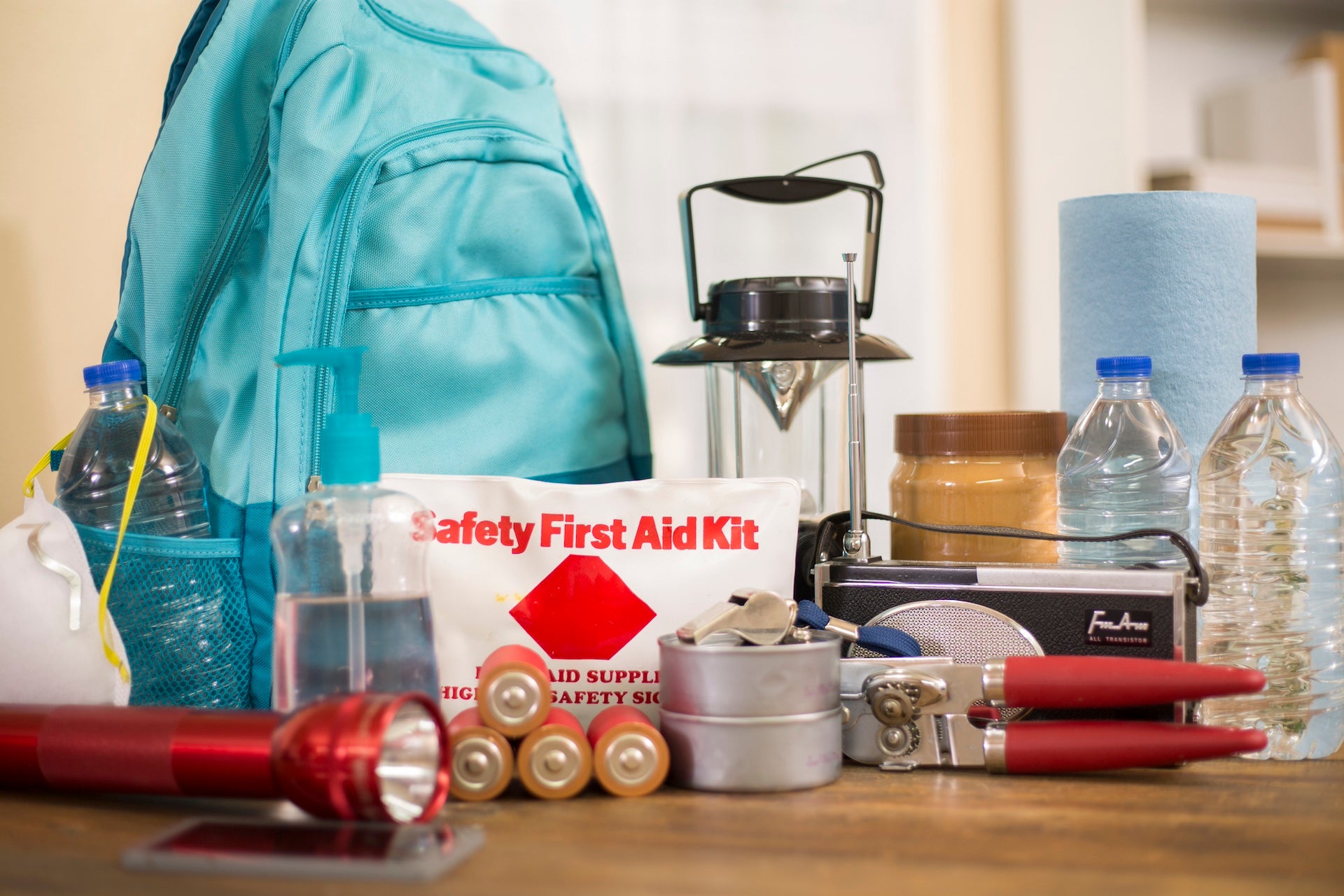
Emergency preparedness supplies. A large collection of supplies to be used in case of a natural disaster (hurricane, flood, earthquake, etc) including flashlight, backpack, batteries, water bottles, first aid kit, lantern, radio, can opener and mask. No People.

National Preparedness Month 2024: Vehicle Disaster Guide

September marks National Preparedness Month, a crucial initiative aimed at promoting emergency readiness. Initiated by FEMA in 2004, it serves to empower individuals, families, businesses, and communities to effectively handle emergencies. Given that Americans spend about 18 days on the road annually, it is imperative to prioritize vehicle preparedness to confront accidents, breakdowns, and other unforeseen incidents head-on! Why Vehicle Disaster Preparedness Matters Driving is one of the most dangerous daily activities. Statistics show that road accidents are common, and breakdowns can occur unexpectedly. Being prepared can make a significant difference in how you handle these situations, ensuring safety and peace of mind. Essential Steps to Prepare Your Vehicle for Emergencies Safety involves minimizing risks and avoiding hazardous situations, providing peace of mind by instilling confidence that emergencies can be handled effectively. This approach also enhances efficiency by reducing downtime and enabling a quicker return to the road. 1. Choose a Bag Choose a durable, high-capacity bag to store your emergency supplies. A duffel bag or a specialized bag like the RUSH LBD Lima, with 56L of capacity and shoulder straps, is ideal for this purpose. Keep it in an easily accessible location, like your trunk or behind your rear seats. 2. Pack Tools Equip your vehicle with versatile tools for minor repairs and emergencies: Multitool: Essential for minor fixes; consider one with a glass breaker for emergencies. Seatbelt Cutter: Keep within arm's reach for a quick escape if needed. Recovery Tools: A folding E-Tool or small shovel can help you get unstuck from sand or mud. Illumination: Headlamps and handheld lights for nighttime repairs. Road Flares: Ensure you're visible to other drivers during roadside emergencies. Fire Extinguisher: A Class A, B, and C-rated extinguisher can save lives and property. 3. Don't Forget Supplies Stock your vehicle with essential supplies: Water: For hydration and as a temporary substitute for radiator fluid (research how to do this safely). Gas Can: For emergencies and extending your range; never store a filled can inside your vehicle. Medical Supplies: Basic first aid kit, including bandages, antiseptic, and a tourniquet. 4. Cover and Protection Prepare for the elements and manual tasks: Poncho: Keep dry during roadside repairs. Masks: For unexpected needs. Gloves: Protect your hands during repairs. Warm Clothes: A change of warm clothing can be a lifesaver. Footwear: Keep sturdy, waterproof boots in your vehicle. Join the Community Effort National Preparedness Month is a collaborative effort involving government agencies, nonprofit organizations, businesses, schools, and communities across the nation. This year's theme, "Start a Conversation," encourages discussing emergency preparedness with family and friends. Set aside time to talk about steps you've taken to prepare and encourage others to ask questions and share their own preparedness actions. Prepare for the Unexpected with the Right Car Preparing your vehicle for emergencies is a crucial step in ensuring your safety on the road. Use the tips above to gather supplies and create a properly stocked vehicle disaster kit. For more resources and information on preparing for emergencies, visit Ready.gov. Make sure you're also driving a vehicle that's ready for anything nature can throw at you. With the help of Savage 61, you can have a new vehicle with enough room for any extensive preparedness kit along with great safety features to keep you safe on your day-to-day drive. Dump your old deathtrap and choose something that's surefooted and dependable on the road today.